10 Days Training on Production of Handmade Products from Nepali Paper and Orientation on Access to Justice Program for Persons with Disabilities
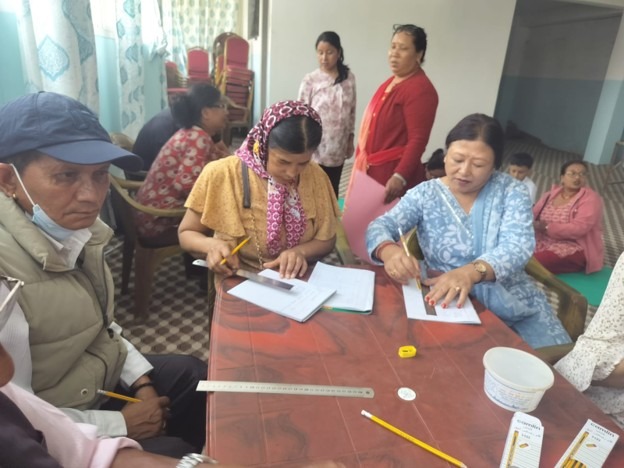
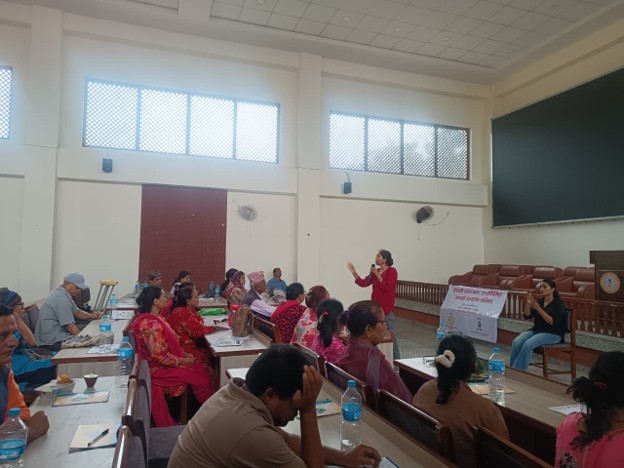
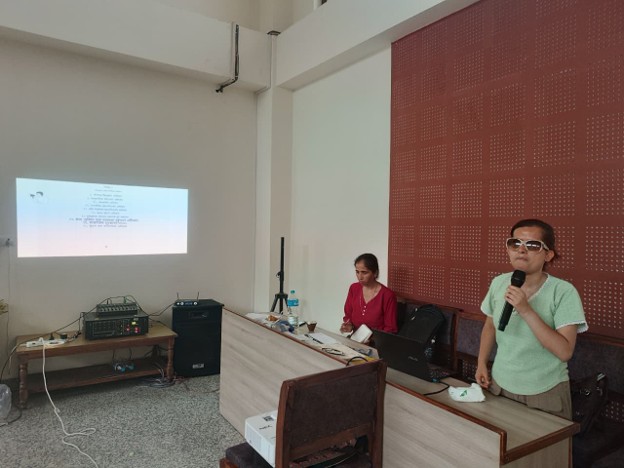
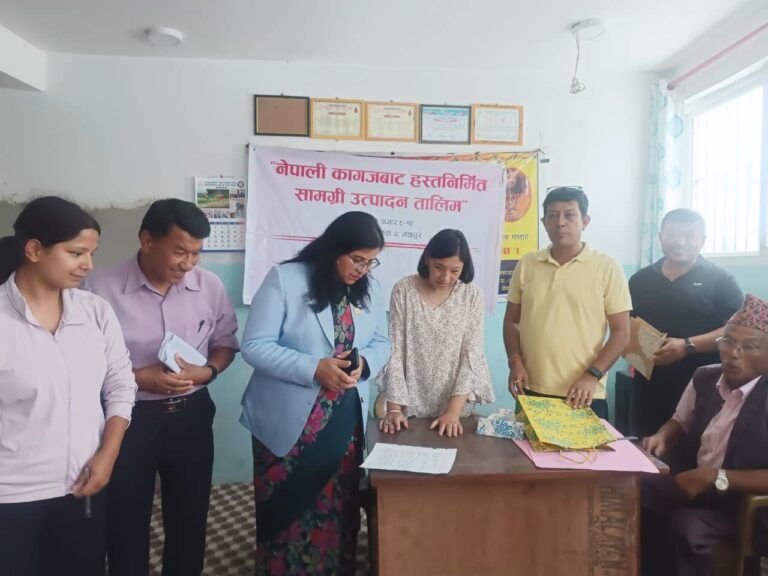
Access Planet Organization conducted “10 Days Training on Production of Handmade Products from Nepali Paper and Orientation on Access to Justice Program for Persons with Disabilities residing in Suryabinayak Municipality. The training was held from June 22 to July 2, 2026, with the generous support of Suryabinayak Municipality under C.B.R program.
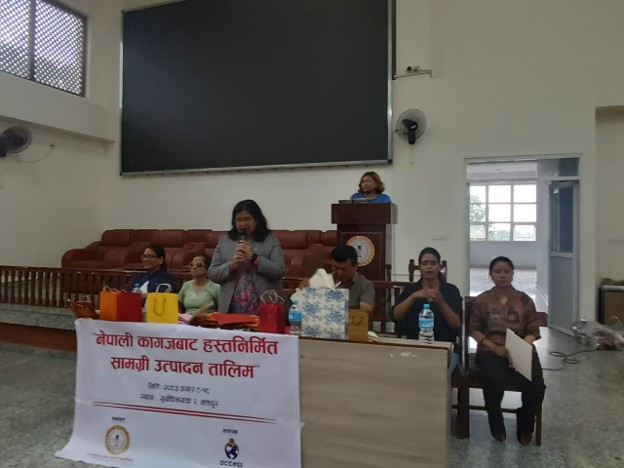
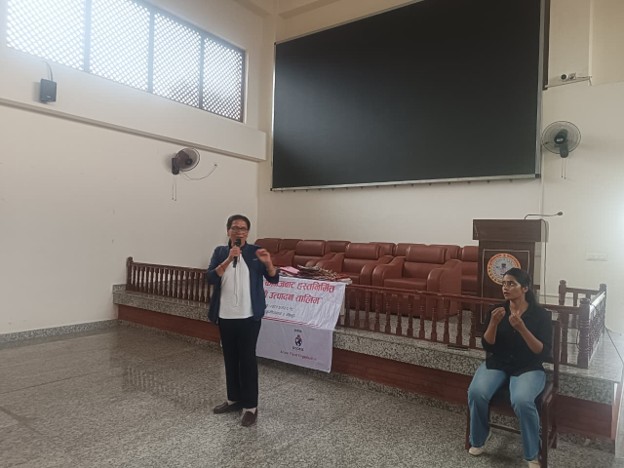
The joint closing ceremony of the Training on Producing Handmade Products from Nepali Paper and Orientation Program on Access to Justice was held on July 2, 2026 at the Suryabinayak Municipality Hall.
The closing ceremony was facilitated by Sarita Thulung, Executive Committee Member of Access Planet Organization. The program was chaired by Laxmi Nepal, Executive Director of Access Planet Organization, Ms. Sarita Timilsina Bhattarai, Deputy Mayor of Suryabinayak Municipality, attended the program as the Chief Guest. Similarly, Ms. Bijaya Subedi, Head of the Inclusion Section of the Municipality, attended as the Special Guest. The handmade paper training facilitators, Mr. Krishnaram Duwal and Ms. Laxmishova Labaju, were also present at the event.
At the closing ceremony, Chairperson Laxmi Nepal welcomed all participants and guests and highlighted the objectives of the program. She expressed her gratitude to Suryabinayak Municipality for providing the opportunity to implement the program, prioritizing the economic empowerment and access to justice of persons with disabilities. She also encouraged participants to continuously practice the skills acquired through the training and link them to income generation and sustainable livelihood opportunities.
Objectives:
- To enhance the economic empowerment, self-reliance, and access to justice of persons with disabilities residing in Suryabinayak Municipality.
- To provide persons with disabilities with practical skills in producing handmade products from Nepali handmade paper, thereby creating opportunities for self-employment and income generation.
- To equip participants with basic knowledge and skills related to product quality, packaging, pricing, and market management.
- To provide persons with disabilities with information on access to justice, legal rights, and available judicial and administrative mechanisms.
- To enhance participants' knowledge of the Local Judicial Committee, violence-related complaint mechanisms, and services and facilities available through local government.
- To strengthen the confidence, social participation, and capacity of persons with disabilities to exercise their rights.
Outcomes
- A total of 20 persons with disabilities acquired practical skills in producing handmade products from Nepali handmade paper.
- Participants developed basic knowledge and confidence to pursue self-employment and operate small-scale enterprises.
- A total of 35 participants gained knowledge about access to justice, the local judicial system, violence-related complaint mechanisms, and their legal rights.
- Coordination and collaboration between persons with disabilities and local government were further strengthened.
- Participants' awareness of and access to services and facilities available at the local government level were enhanced.
- The program had a positive impact on participants' confidence, social participation, and awareness of their rights.
Certificate Distribution and Product Exhibition
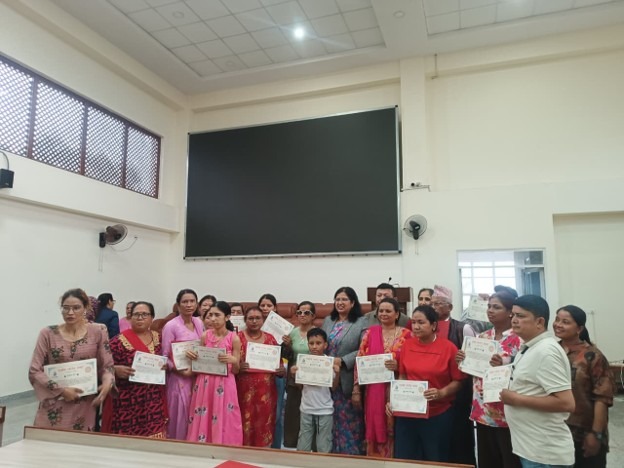
During the closing ceremony, certificates were distributed to all participants of the Training on Producing Handmade Products from Nepali Paper and the Orientation Program on Access to Justice.
An exhibition of various products made by participants throughout the training, including paper bags, envelopes, and decorative items, was also organized. The exhibition provided an opportunity for participants to showcase their creativity, learning, and achievements to all attendees and distinguished guests.
Conclusion and Recommendations
The training made a significant contribution to achieving its stated objectives of promoting the economic empowerment and access to justice of persons with disabilities. By integrating skill development training with a rights-based orientation program, participants benefited from both economic and social empowerment opportunities.
To make similar programs more effective and sustainable in the future, the following recommendations are proposed:
-
Conduct advanced-level training on producing handmade products from Nepali paper.
-
Provide partial support to participants for the procurement of necessary materials and equipment.
-
Create opportunities for product marketing, promotion, and exhibitions.
-
Encourage participants to form cooperatives or small enterprise groups.
-
Expand access to justice awareness programs regularly to the ward level.
Image Gallery